

Commentaire
Thank you for the opportunity to submit comments on proposed changes to the Planning Act, City of Toronto Act, 2006, Building Code Act, 1992 and Municipal Act, 2001, under schedules 7, 2, 1 and 6 of Bill 98, the Building Homes and Improving Transportation Infrastructure Act, 2026.
I am writing to submit comments on behalf of the Fatal Light Awareness Program (FLAP) Canada. FLAP is a Toronto-based registered charity focusing on reducing bird collisions with glass on buildings. For over thirty years, FLAP has collaborated with Ontario municipalities, beginning with the City of Toronto, to enact solutions for bird collisions through effective, evidence-based public policy. Our organization has contributed its expertise to support the development and adoption of guidelines and standards for bird safe building design by municipalities and the federal government, primarily through the CSA A460 Bird Friendly Building Design standard that was sponsored by the Government of Ontario in 2019.
FLAP is deeply concerned by the implications of Bill 98 for municipal green building standards, including for bird safe design, that have been enacted through site plan control bylaws by numerous Ontario municipalities. We concur that it makes sense for environmental performance requirements to be standardized across the province. However, we expect that eliminating municipal building design standards through Bill 98 without replacing them in a provincial framework such as the Building Code, will cause massive harm to migratory birds, and undermine decades of Canadian leadership on mitigating bird collisions with buildings.
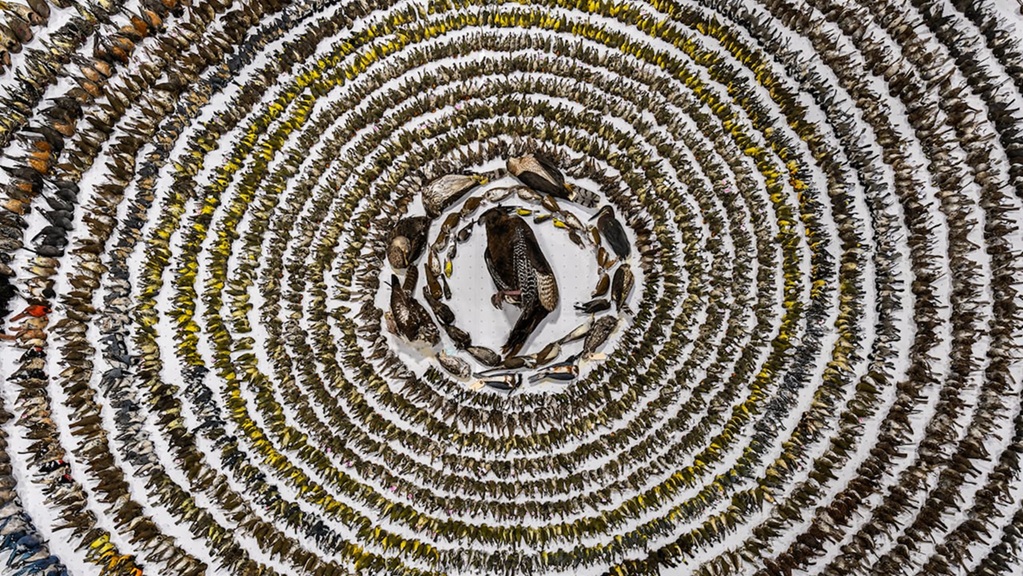
Migratory birds are susceptible to colliding with buildings across Ontario. Scientific estimates based on decades of monitoring indicate collisions with buildings result in millions of bird deaths in Ontario per year. Bird collisions affect species that are protected under the federal Species at Risk Act and Migratory Birds Regulations, as well as Ontario’s Environmental Protection Act (see Podolsky v. Cadillac Fairview, 2013). These federal regulations prohibit building owners from killing birds by causing collisions with unsafe building construction (i.e., incidental take). The federal government is currently actively investigating various properties across Ontario that have been subject to complaints about killing listed species. The design of new building construction using materials that will kill birds will thus expose future property owners to liability, or lead them to incur potentially significant costs for retrofitting exterior glazing.
The most cost-effective way to implement bird safe design is to integrate bird safe glazing materials in the initial construction. FLAP’s research and consultations with architects suggest that the costs of including bird safe design in building construction budgets are negligible. Across Ontario, numerous manufacturers of glazing technologies offer a wide range of solutions for buildings to comply with bird safe design specifications. Indeed, developers have successfully included bird safe design in new buildings in Toronto since 2008 with no impact to approval or construction timelines, or overall costs.
We therefore urge the Government of Ontario to incorporate a reference to CSA standard A460 Bird Friendly Building Design into the appropriate sections of the Ontario Building Code. Short of adopting a province-wide standard, please amend Bill 98 to allow municipalities to retain their authority to enforce green building standards, including for bird safe building design, through site plan control.
Please do not hesitate to reach out to FLAP Canada if you have any questions or wish to discuss the province’s approach to protecting bird populations from collisions with buildings.
Respectfully,
Michael Mesure
Executive Director, FLAP Canada
Documents justificatifs
Soumis le 13 avril 2026 3:07 PM
Commentaire sur
Modifications proposées à la Loi sur l’aménagement du territoire, à la Loi de 2006 sur la cité de Toronto, à la Loi de 1992 sur le code du bâtiment et à la Loi de 2001 sur les municipalités (annexes 1, 2 et 7 du projet de loi 98, Loi de 2026
Numéro du REO
026-0300
Identifiant (ID) du commentaire
184187
Commentaire fait au nom
Statut du commentaire